
"I don't like magic. There's no transparency in other games. There's no real way of digging into it and figuring out what the logic behind determining the results is. That's the beauty of the table game. How does a player's range rating affect the game? You don't have a clue in other computer games on how ratings are used and when. In fact, you could have ratings that the computer never used and no one would know." — Dave Sausser Valencia, CA
Why you'll love DYNASTY League Baseball
Highly realistic, transparent and easy to play.

Did you know DYNASTY League Baseball has been on display at the National Baseball Hall of Fame
and is part of the permanent archives?
Realism You Never Thought Possible
Many times you can look back at a baseball game and find several "little things" — let's call them subtleties — that determined the outcome of the game. It might be a foul ball that just makes the stands in the tiny foul territory in Fenway Park that gives a hitter another life or the swirling wind in Candlestick Park that turns a routine fly ball into an adventure for a visiting team player. It's one of the reasons why we love baseball.
Fenway Park's Tiny Foul Territory gives hitters an extra life (89% chance of a foul into the stands instead of being caught in fair territory)and increases batting averages at Fenway.
DYNASTY League Baseball uses an upgraded version of the Pursue the Pennant game engine. "It's Pursue the Pennant perfected!"
Realism and attention to Baseball's subtleties is at the heart of the design of DYNASTY League Baseball and is what makes the game so fascinating to play. The goal was to make DYNASTY League Baseball even more realistic and accurate yet easier to play than the game I previously designed — the Pursue the Pennant board game. DYNASTY League Baseball is truly Pursue the Pennant perfected.
Back in the Spring of 1992 when we first started working on the concept of the game design concept, I was discussing my approach with Dave Sausser, a friend of mine from California. Dave was explaining that what he really wanted to see was the DYNASTY League Baseball Board game translated into a computer version. He did not want a black box "computer game". He wanted a transparent game that played on the computer.
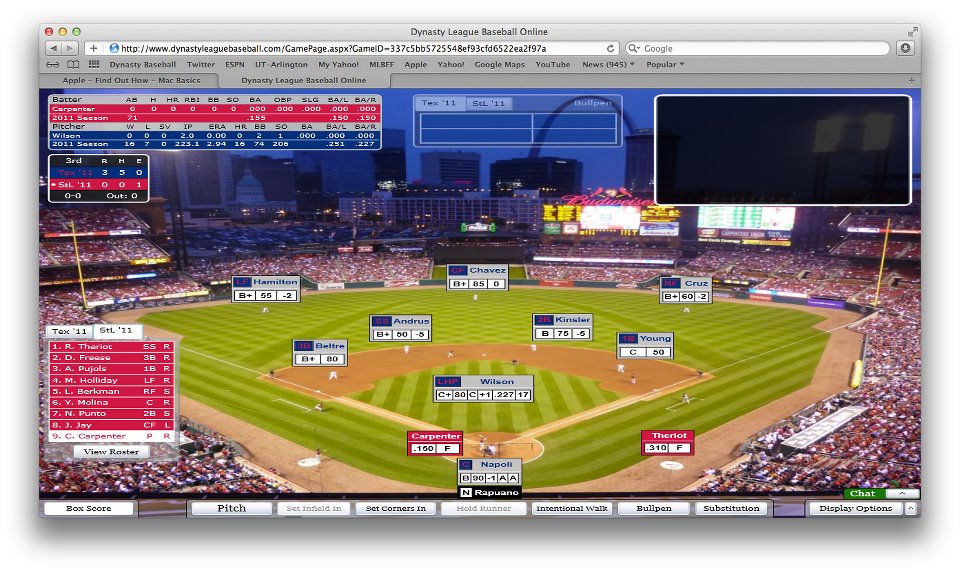
As Dave explained; "I don't like magic. There's no transparency in other games. There's no real way of digging into it and figuring out what the logic behind determining the results is. That's the beauty of the table game. How does a player's range rating affect the game? You don't have a clue in other computer games on how ratings are used and when. In fact, you could have ratings that the computer never used and no one would know."
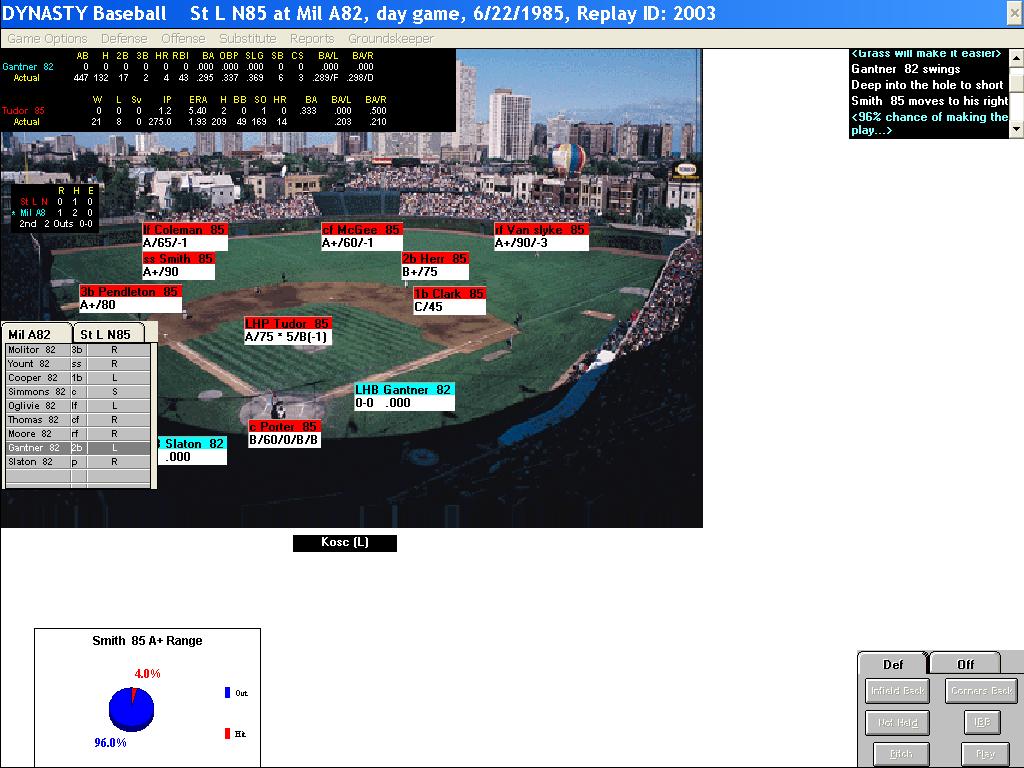
Ozzie Smith will shows off his A+ range rating for you on plays deep in the hole at shortstop. You know exactly when Ozzie's range rating comes into play and what % chance he has of making the play vs. other shortstops.

"I have received the 3rd edition charts and played my first game which I enjoyed greatly. I find your layout very easy to grasp and realistic. Your web page nailed it on the head with the quote from your friend Dave about not wanting magic and the need for transparency. I will be playing a greatest team tournament while I am on the road covering stories for ESPN. Congratulations on a great game and even finer service."
Andrew Lockett — ESPN Outside the lines Producer
Pop Up Detail: Wrigley Field wind is the difference between a HR into the basket or a warning track out
IIn April and May the wind often comes off Lake Michigan (less than a mile to the east), which means a northeast wind "blowing in" to knock down potential home runs and turn them into outs. In the summer, however, or on any warm and breezy day, the wind often comes from the south and the southwest, which means the wind is "blowing out" and has the potential to turn normally harmless fly balls into home runs. A third variety is the cross-wind, which typically runs from the left field corner to the right field corner and causes all sorts of interesting havoc.
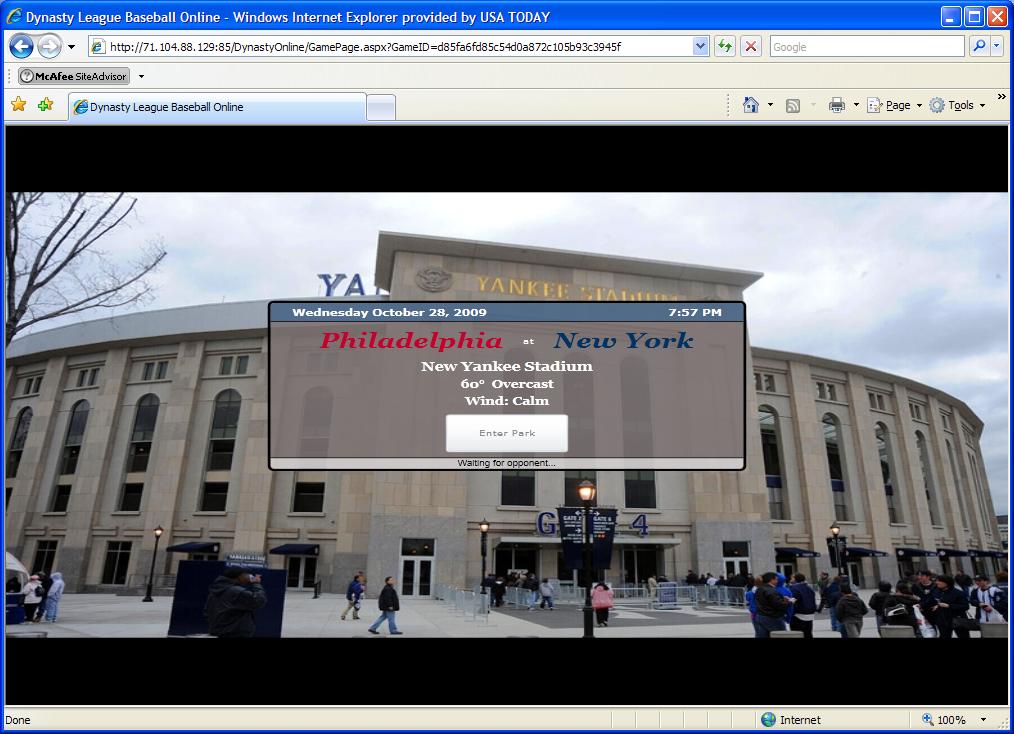
Depending on the direction of the wind, Wrigley can either be one of the friendliest parks in the major leagues for pitchers or among the worst. Before the game starts playing DYNASTY League Baseball, you will see the weather being determined based on actual weather bureau data by month, day or night, ball park and region.